

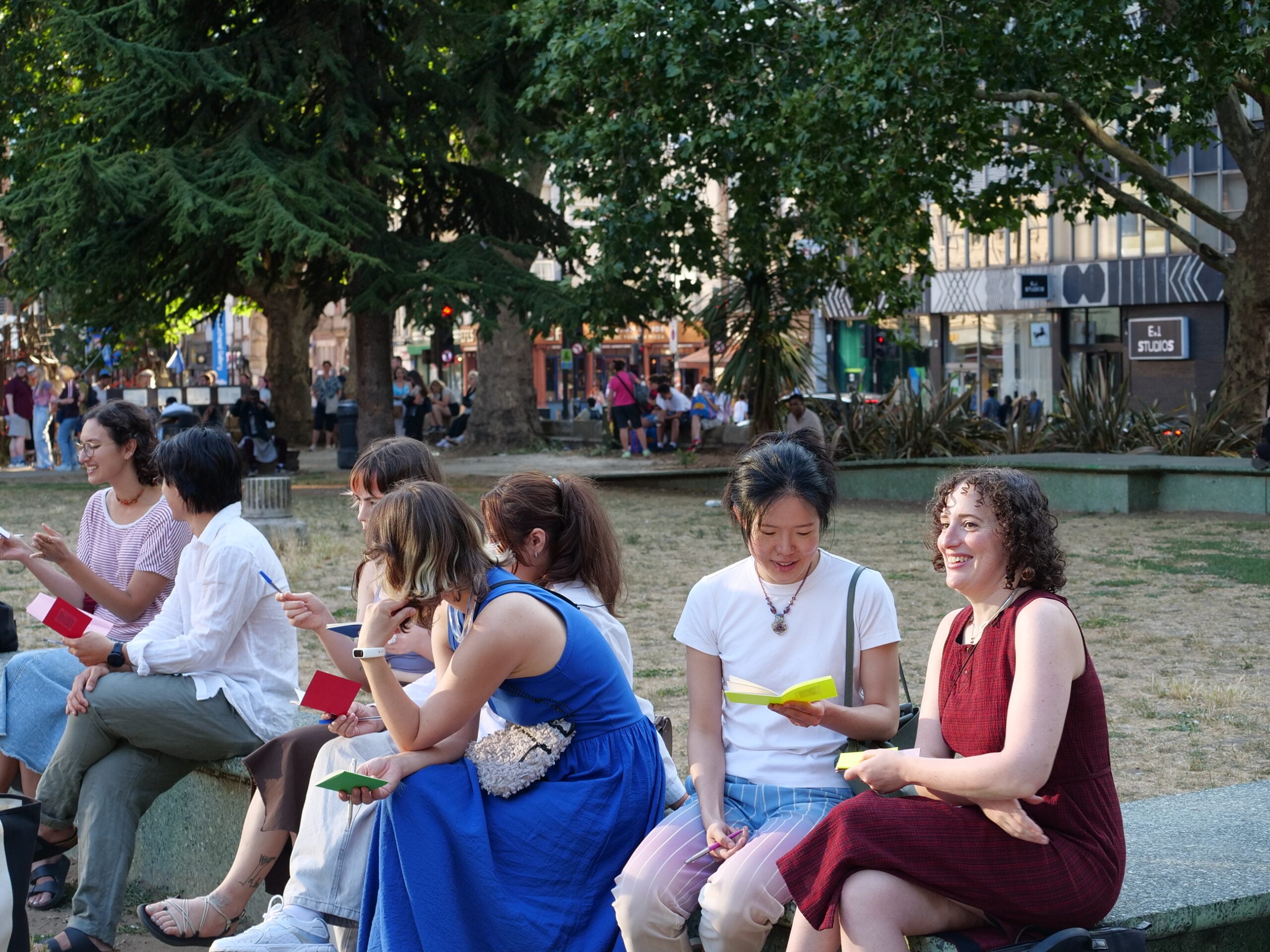
The Collaboration and Innovation Grant brings together interdisciplinary teams involving researchers, engagement professionals, and partners from cultural, creative, charity, and community sectors. It funds newly formed, practice-led teams to experiment and deliver projects that reimagine the scope of what public engagement can be. Funded projects will focus on team building, creating new and lasting connections, and knowledge exchange that cuts across sectors, disciplines and functions. The teams will develop collaborative activities across a wide range of places within the UK.
Across the seven awarded projects, the CPEP team will be working with 22 Higher Education Institutions and 3 Independent Research Organisations, with a total of 24 researchers, 12 professional services staff and 23 non-academic partners involved throughout England, Scotland and Wales.
Projects will focus on wide-ranging themes including: early music research and performance, materiality of textile collections, whale communication, our relationship with fossil fuels through time and space, industrial and cultural legacies of copper, slow-disaster of wetland systems, and social meanings of gossip.
The Centre for Public Engagement Practice in Arts and Humanities is based within the School of Advanced Study at the University of London. The Collaboration and Innovation Grant is part of the Centre’s wider research enquiry into public engagement practice in line with the School’s national mission. The grant is funded by UK Government through UK Research and Innovation.
Projects will take place between September 2026-July 2027.
Awarded Projects
Interactive engagement with early music – a national programme of experimental workshops
Led by University of Birmingham, with University of Oxford, Royal College of Music, Northumbria University, Guildhall School of Music and Drama, Natural History Museum, National Early Music Association (NEMA), Brighton Early Music Festival, Music Summer School, an independent heritage content creator, and The National Trust.
The project brings together researchers, performers, educators, heritage organisations, and amateur musicians to develop new ways of engaging the public with early music research and performance. Through workshops, public events, and collaborative research activities delivered in partnership with Early Music Fora and the Brighton Early Music Festival, it explores how academic, professional, and community expertise can work together to make early music more accessible and inclusive. By placing amateur participation at the centre of historical research and performance, the project will test innovative models of public engagement, strengthen national partnerships, and lay the foundations for a long-term network supporting living historical practices across music and other embodied cultural traditions.
Community and care through global textile histories
Led by University of the Arts London, with De Montfort University, the Victoria and Albert Museum East, The Karun Thakar Collection, independent creative practitioners from London and Leicester.
The project brings together the expertise of London College of Fashion and De Montfort University with the archives of the V&A East Storehouse and the treasures of the Karun Thakar Collection – a unique and rarely accessed repository of antique African and Asian textiles. The proposed collaboration will connect the 200-year textile manufacturing heritage of Leicester with the historic fashion district of East London, using the curatorial innovations of the Storehouse as a catalyst for a new model of textile-based engagement.
Ecological Translation
Led by University of Kent, with University of St. Andrews, EU Policy Lab, and Furtherfield.
The project will develop a citizen-science initiative responding to the claim that we are on the cusp of a ‘Google Translate’ for whale communication. Current initiatives leading on interspecies translation are methodologically informed by AI, machine learning and underwater acoustic recording. The project asks: Who decides what marine life is saying? Whose interpretation counts? And who bears the consequences? At present, the groups leading this agenda are technical experts operating largely without direct engagement with coastal communities. The project will respond to the worrying demographic decline of UK fishing communities by offering new forms of collective purpose and visibility; to cultivate approaches to AI grounded in community development rather than anxiety; and to build a working prototype for civic consultation on emerging policy themes. Participation includes Dr. Alexander Damianos and Dr. Swastee Ranjan (University of Kent), Dr. Luke Rendell (University of St. Andrews), Ruth Catlow (Furtherfield) and Elahe Rajabiani as independent research partner (EU Policy Lab).
Kairos: A Time for Action
Led by University of Cumbria, with University of Leeds, Lancaster University, More Music Morecambe and various musicians, artists and composers.
Kairos: A Time for Action brings together researchers, visual artists, musicians and Morecambe-based community music charity More Music, to explore how complex concepts from the environmental humanities and social sciences can reach new audiences through participatory arts practice.
Growing out of the Kairos collective, an informal collaboration fusing traditional music, electronic soundscapes and spoken-word material, the project will run a series of participatory events and workshops around Lancaster and Morecambe. Members of the public will engage with concepts including ‘slow violence’, ‘solastalgia’, ‘deep time’ and ‘the Anthropocene’, contributing their own responses, written, visual, musical and spoken, which will directly shape the project’s final outputs. The project will culminate in three multimedia performances, one of which will be programmed at Morecambe’s Three Degrees Festival.
Copper Frequencies / Amleddau Copr
Led by Northumbria University, with University of Derby, Bangor University, Aberystwyth University, Amlwch Industrial Heritage Trust, and an independent sound artist
The project brings together poets, sound artists, field technicians, archaeologists, geologists, public engagement professionals and community heritage partners to develop the ‘mineral imagination’: a generative rather than extractive engagement with geological matter, oriented as much toward copper’s futures as its histories. As demand for copper accelerates with the energy transition, it asks what poetry and sound bring to a conversation usually confined to policy and economics. Working with Amlwch Industrial Heritage Trust, with geological expertise from GeoMôn UNESCO Global Geopark, the project is grounded at Parys Mountain in Anglesey – mined since the Bronze Age, probably once the world’s largest copper mine, and now the focus of proposals for a new polymetallic mine. Online sessions and a bilingual, immersive two-day site workshop will bring residents together with the team as co-creators, surfacing intimate, affective and imaginative relationships with mineral histories and futures.
From ecological ‘Slow Disasters’ to biodiverse food security in the Cambridgeshire Fens and Norfolk Broads
Led by the McDonald Institute for Archaeological Research University of Cambridge, with Norwich University of the Arts, Tyndall Centre for Climate Change Research University of East Anglia, artist Andrew Merritt, and Looking Forward Art Projects C.I.C.
The project aims to engage communities around the centuries-long socio-ecological degradation (or “slow disasters”) and future potential enrichment of two of East Anglia’s major wetland systems: the Cambridgeshire Fens and the Norfolk Broads. Both have suffered significant environmental change, but contrast significantly: the Fens are characterised by intensive agriculture and peat loss, while the Broads are shaped by tourism, recreation, and conservation. The project brings these regions into dialogue through historical ecology, environmental archaeology, palaeoecology, and social art practice. By combining the Fens’ rich deep-time bio-cultural and ecological records with the Broads’ experience of active wetland conservation, the project explores how historical records can inform and be part of wetland agriculture, climate-resilient food production, and regional food security. A team of academic researchers, visual artists, designers, and curators will come together to test how complex scientific datasets can be interpreted through visual, spatial, and participatory methodologies.
Gossip Forum
Led by University of Lancashire, with Edge Hill University, Glasgow School of Art, Gallery of Modern Art (GoMA), an independent artist, Hospitalfield, Glasgow Women’s Library, Manchester City Galleries and The Birley.
The project forms an interdisciplinary network bringing together researchers, artists, museums, and community organisations to explore feminist and queer histories of labour, care, and collective knowledge across Scotland and North West England. Reclaiming “gossip” as a powerful form of shared knowledge rather than idle talk, the project uses museum collections, archives, and creative practice to examine how women’s and LGBTQ+ histories have been marginalised, silenced, or erased. Through collaborative workshops, printmaking, and public engagement across partner institutions, participants will develop creative skills while reinterpreting historical materials through contemporary perspectives. By connecting communities with cultural collections, the project creates new opportunities for collective storytelling, strengthens partnerships between heritage organisations and artists, and establishes a sustainable model for community-led interpretation, care, and social activism.